
Image Full
  • Guarantee List Image

    30 Day
    No Quibble Guarantee

  • Guarantee List Image

    Money Back Guarantee
    FREE UK Returns

  • Guarantee List Image

    FREE Next Day Delivery on orders over £65*

  • Guarantee List Image

    30 Days Instant Credit For UK Businesses

Home Medical Anaphylaxis Safety & Awareness Anaphylaxis Posters

Anaphylaxis Posters

Support allergy awareness and anaphylaxis preparedness with our range of anaphylaxis posters. Designed for schools and other settings, these posters provide clear guidance on recognising symptoms, responding to emergencies and supporting allergy awareness ...

Our range includes posters covering anaphylaxis management, emergency response and allergy awareness, helping staff and pupils understand the signs of anaphylaxis and the correct action to take in an emergency. Clear, easy-to-follow information makes these posters ideal for displaying in classrooms, corridors, staff rooms, medical rooms and other high-visibility areas. Durable materials provide a practical, long-lasting solution for keeping important allergy and anaphylaxis guidance visible when it is needed most.

Important information about allergic reactions

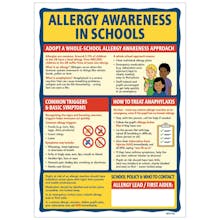
However effective a measures to reduce exposure to allergens may be, a risk remains that an individual will suffer an allergic reaction. It is therefore essential that the allergy safety policy provides robust and effective measures for emergency response.  
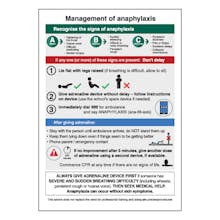
Allergic reactions occur when a susceptible person is exposed to something (an “allergen”) they are allergic to. Most allergic reactions do not affect the Airway/Breathing/ Circulation (“ABC”) and can be treated with an oral antihistamine. 
Allergic reactions are unpredictable. Most reactions do not result in anaphylaxis. However, when anaphylaxis occurs, reactions usually start off as less severe (e.g. skin rash, vomiting) but then become anaphylaxis – so someone having a reaction should always be monitored (e.g. in a first aid room) for at least 60 minutes afterwards, just in case the reaction gets worse. In other people, anaphylaxis develops within minutes after exposure to the allergen.

Features of an allergic reaction and anaphylaxis:

Mild-moderate reaction (not anaphylaxis) 

  • Swollen lips, face or eyes 
  • Itchy or tingling mouth 
  • Mild throat tightness 
  • Hives or itchy skin rash  
  • Abdominal pain or vomiting 
  • Sudden change in behaviour

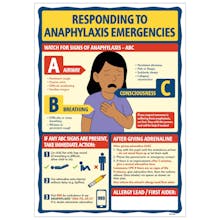
Signs of anaphylaxis (think ‘A B C’)

A: Airways: Swelling in the throat, tongue or upper airways (tightening in the throat, hoarse voice, difficulty swallowing)

B: Breathing: Sudden onset wheezing, breathing difficulty, noisy breathing 

C: Circulation: Dizziness, feeling faint, sudden sleepiness, tiredness, confusion, pale clammy skin, loss of consciousness

Anaphylaxis is a severe and life-threatening allergic reaction - it can be fatal if treatment is not given quickly.

Mild reactions can worsen and become anaphylaxis. Always stay with someone having an allergic reaction for at least one hour. If in doubt, always treat for anaphylaxis. Treatment of anaphylaxis is with a dose of adrenaline.

Once started, anaphylaxis reactions progress quickly. Investigations into fatal anaphylaxis show that there is a very short window of opportunity during which steps can be taken to prevent death – therefore giving emergency adrenaline immediately and calling Emergency Services (999) is so important. Anaphylaxis always requires an emergency response. Anaphylaxis can occur without any other signs (such as a skin rash) being present. Always consider anaphylaxis in someone with a known food allergy who has sudden difficulty in breathing.


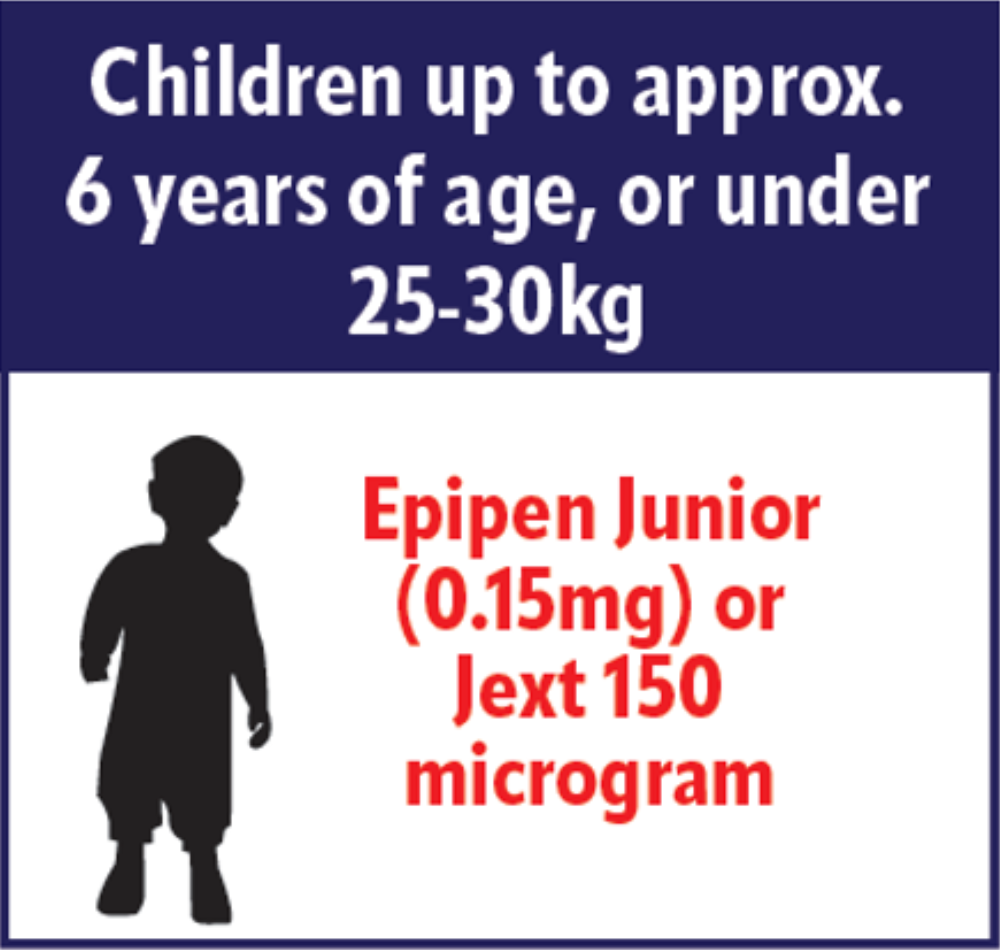
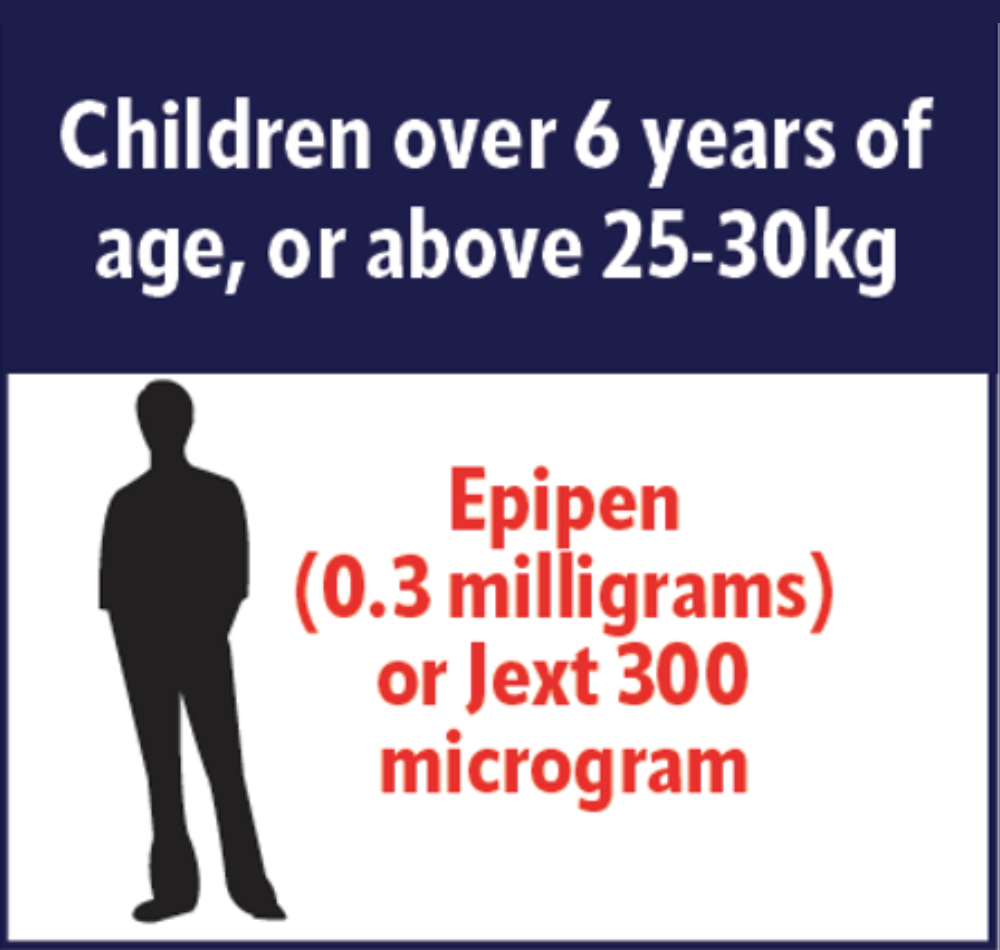
Adrenaline devices are available in different dosages depending on body weight/age. AAls are highly intuitive and easy to use devices used for the emergency treatment of anaphylaxis.

Image Full
Image Full
Image Full

Eureka Anaphylaxis Kits are supplied as empty storage kits, designed to provide a clearly organised and accessible place for schools to store their existing adrenaline auto-injectors (AAIs). The kits feature clearly marked slots for 150mcg and 300mcg doses, helping to keep devices organised according to their dosage. Kits are also available with four slots for the same dosage, providing a flexible storage solution to suit your school's requirements.

Please note: Eureka Anaphylaxis Kits are supplied empty and do not include adrenaline auto-injectors (AAIs). They are designed for schools to store their existing emergency or personal AAI supplies safely and clearly.

Ensure that devices are stored in the correct slot that matches their dosage when adding devices and performing regular maintenance inspections.

"In the context of supplying schools with AAIs for use in an emergency setting, using these same age-based criteria avoids the need for multiple devices/doses, thus reducing the potential for confusion in an emergency. Schools should consider the ages of their pupils at risk of anaphylaxis, when deciding which doses to obtain as the spare AAI." 

- Department of Health: Guidance on the use of adrenaline auto-injectors in schools 

Asthma is an additional reaction which may require treatment with a personal or emergency inhaler as a result of an allergic reaction, and is common among those with known severe allergies. Tragically, over a recent 4 year period, the National Child Mortality Database Report on Asthma and Anaphylaxis notes that all of the children who sadly died from anaphylaxis and had known allergies, were also diagnosed with asthma.

Allergy Care Doesn't Stop at Anaphylaxis

Benedict’s Law highlights the importance of a comprehensive approach to allergy management, with schools expected to consider both anaphylaxis and allergic asthma within their emergency response procedures. While anaphylaxis remains a key focus, allergic asthma is another potential reaction that may require urgent treatment, particularly among children with severe allergies.

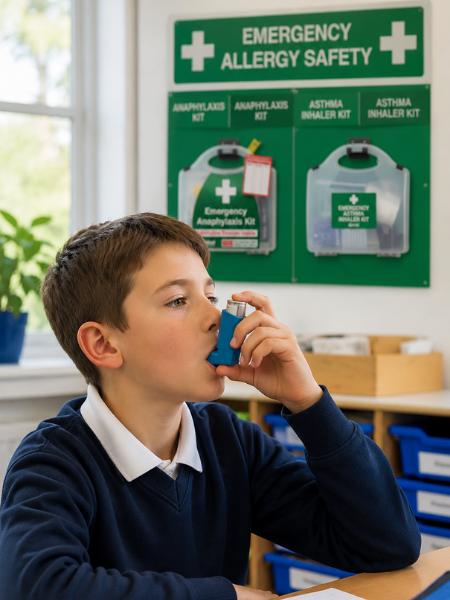
DfH state "Schools might like to keep the emergency kit together with an "emergency asthma inhaler kit" (containing an inhaler device and spacer.) Many food-allergic children also have asthma, and asthma is a common symptom during food-induced anaphylaxis."

The latest statutory guidance from DfE states “It is recommended that schools keep emergency asthma reliever inhalers alongside “spare” adrenaline devices.”

Effective allergy management involves more than responding to an emergency. Schools should have clear procedures in place to support pupils with allergies, ensure staff understand how to respond to an allergic reaction, and make appropriate emergency provisions easily identifiable and accessible.

Our range of empty storage kits, points, and cabinets can help schools keep their existing emergency allergy supplies organised, clearly identified and readily accessible when needed. Suitable storage and clear signage can also help staff quickly locate the appropriate provisions during an emergency and support regular checks and maintenance.

Image Full

Providing Emergency Allergy Provisions On Day Trips

Without proper policies and safeguards, allergies exclude some students from taking part in school activities. The latest guidance changes this.

Image Full

Arrangements must now be clear and unambiguous about the need for proactive support so that children and young people with medical conditions can participate in school trips and visits, or in sporting and extracurricular activities, and not prevent them from doing so.

Schools, colleges and early years settings should consider what arrangements they need to make to enable children with medical conditions to participate fully and safely on trips and visits.

A risk assessment should be carried out so that planning arrangements take account of any reasonable adjustments needed to ensure that children and young people with medical conditions are included, including allergies. 
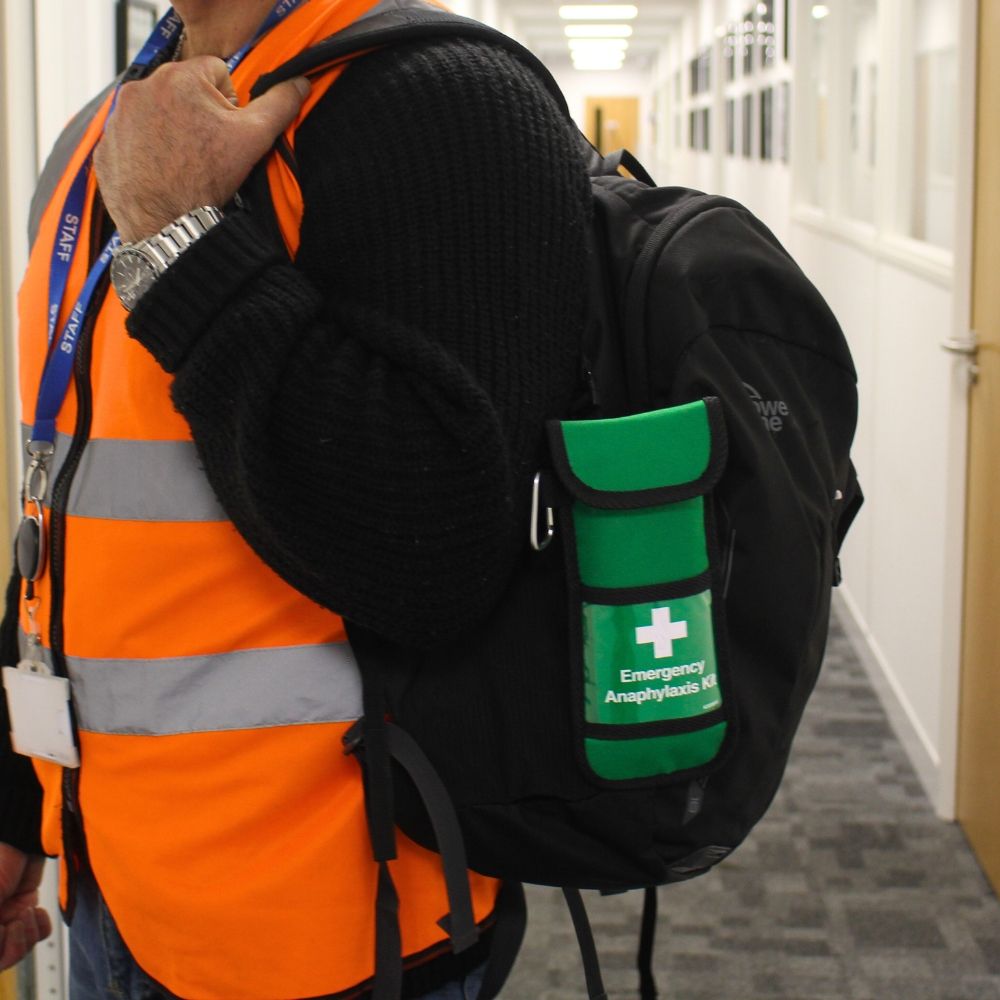
Such plans should include how individuals at risk of anaphylaxis will have access to their prescribed adrenaline devices, alongside any “spare” adrenaline devices; and how children and young people with allergies will be able to participate safely in visits, trips and extra-curricular activities

Our range of anaphylaxis kit soft pouches and insulated pouches are a simple and cost-effective solution for ensuring that prescribed or emergency/spare devices can be readily available on school visits/trips, or activities away from the main school building, and clearly identifiable at all times as part of such arrangements.

Image Full

What Does Benedict's Law Mean For Schools?

The new statutory guidance has introduced stronger statutory requirements for allergy safety in schools in England. Issued alongside the Children's Wellbeing and School Act, it builds on and strengthens existing AAI guidance established by the Department for Health.

Schools in England must now:

  • Develop and publish a whole-school allergy policy, setting out how allergies are managed and how allergic reactions and emergencies will be handled
  • Provide appropriate allergy and anaphylaxis awareness training, helping staff recognise the signs of an allergic reaction and understand how to respond
  • Ensure appropriate emergency arrangements are in place, including access to emergency medication where required
  • Put individual allergy or healthcare plans in place for pupils with diagnosed allergies
  • Maintain clear communication and accurate records, ensuring relevant staff are aware of pupils' allergies and the appropriate response
  • Meet food safety and allergen information responsibilities, including identifying allergens, preventing cross-contact, communicating allergen information and ensuring the correct food reaches the correct pupil
Image Full

Under the new requirements, schools are expected to implement a comprehensive Allergy Policy, which incorporates:

  • Providing regular anaphylaxis training for all staff as standard practice
  • Ensuring the policy covers the full range of medical and allergic conditions, including allergic asthma
  • Ensuring pupils with allergies can participate fully and safely in all school activities
  • Logging of plans, procedures, incidents and near misses
  • Schools that provide food on a regular and organised basis are considered food businesses and therefore must make arrangements for identifying allergens, preventing cross-contact, communicating allergen information


Anaphylaxis and Allergy Awareness Training

Around 680,000 children in England live with allergies – and 1 in 5 fatal food-anaphylaxis cases occur in schools.

Schools have a legal duty to support pupils with allergies and ensure appropriate arrangements are in place to manage allergic reactions and emergencies. Allergy awareness training can help staff understand how to recognise the signs of anaphylaxis and respond appropriately when an emergency occurs.

Training should cover not just teachers, but all staff who may be present while pupils are on site, including temporary staff, volunteers, caretakers, catering staff and others who may supervise pupils outside of the classroom.

Our Anaphylaxis Awareness Level 2 (VTQ) course provides accessible, evidence-based training to help school staff develop their understanding of anaphylaxis and allergy awareness. The course covers how to recognise and respond to anaphylaxis, including guidance on the use of adrenaline auto-injectors, helping staff understand the appropriate emergency response. 

The course material and resulting qualifications are endorsed by TQUK, and fully meet the latest UK and European Resuscitation Council Guidelines, including the guidelines for Anaphylaxis. 

Why Buy From FirstAid4Less?

Image Full

Widest Range from a first aid specialist – Choose From Over 10,000 Products!

Image Full

Expert Product Advice and guidance on regulations

Image Full

Lowest Prices - Seen a cheaper like-for-like price? Let us know!

Image Full

Next Working Day Delivery on stocked items

Image Full

Instant Credit for all established UK businesses – pay on invoice!

Image Full

You Can Talk To Us! Via freephone or instant chat

Image Full

Thousands of 5 star trustpilot reviews – placing an order is fast and simple