- Delivery Times

Please note:  We are processing orders as normal.  However, we cannot guarantee same-day despatch for orders placed on Wednesday 1 July.  All orders placed on Wednesday 1 July will be despatched on Thursday 2 July, with no further delay to expected delivery times.  Thank you for your understanding.

Image Full
  • Guarantee List Image

    30 Day
    No Quibble Guarantee

  • Guarantee List Image

    Money Back Guarantee
    FREE UK Returns

  • Guarantee List Image

    FREE Next Day Delivery on orders over £65*

  • Guarantee List Image

    30 Days Instant Credit For UK Businesses

Home First Aid Kits & Refills BS8599 Compliant First Aid Kits

BS8599 Compliant First Aid Kits

The latest British Standards update, BS8599-1:2019+A1:2026 provides updated guidance for workplace first aid, helping employers select equipment based on workplace risks and size. The amendment introduces dedicated recommendations for eye wash kits and burns kits where hazards are present. It encourages organisations to review Automated External Defibrillator (AED) provision as part of workplace emergency preparedness.

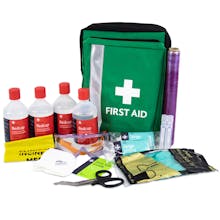
This category includes BS8599-1 compliant workplace first aid kits, eye wash kits, burns kits and associated first aid supplies designed to help businesses align with the latest British Standard guidance. Choose from complete kits, compliant refills, replacement contents and specialist kits suitable for schools, colleges, offices, warehouses, manufacturing facilities and other workplace environments where eye wash or burns provision may be required.

What Your Workplace May Need Under BS8599-1:2026

The BS8599-1:2026 guidance recommends first aid provision based on your workplace risk assessment. Depending on the hazards and people present on site, you may need the following: 
  • First Aid For Eyes: Your first aid provision should include a BS8599-1 eye wash kit where a risk assessment identifies a risk of eye injury.
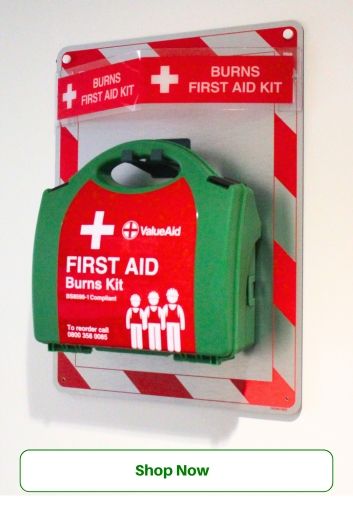
  • First Aid For Burns: Your first aid provision should include a BS8599-1 burns kit where a risk assessment identifies a high risk of burn injury
  • Defibrillators: You should have a defibrillator on your premises, accessible within 2 minutes, if your first aid needs assessment identifies one as necessary, particularly where five or more people are regularly on site.

New 2026 Amendments to BS8599 Now Live – Are Your Premises Compliant?

Image

The Health and Safety (First-Aid) Regulations 1981 require employers to provide adequate and appropriate first aid equipment, facilities and personnel so employees can receive immediate attention if they are injured or taken ill at work. The 2026 amendment to BS8599-1 strengthens this expectation by giving updated guidance on workplace first aid kit provision, burns kits, eye wash kits and Automated External Defibrillators (AEDs).

British Standards are not legislation, but they reflect recognised good practice. Following the latest guidance can help organisations demonstrate that they have taken reasonable steps to provide suitable first aid cover based on workplace risk, site size and the people present on site.

Defibrillators should be clearly displayed and accessible quickly, with provision considered for workplaces where five or more people are regularly on site.

Eye wash kits are now included where a risk to eyes has been identified and BS8599-1 workplace first aid kits are present.

Burns kits are now included where a high risk of burn injury has been identified, with contents aligned to the latest guidance.

With the 2026 amendments now live, organisations should review their first aid risk assessments, check the location and suitability of their first aid equipment, and update supplies where needed to remain aligned with the latest British Standard guidance.

BS8599-1:2026 First Aid Updates

The 2026 amendments to BS8599-1 introduce important updates for workplace first aid provision, including clearer guidance on eye wash kits, burns kits and the placement of AEDs. Employers should use their first aid needs assessment to identify workplace risks, review who may be present on site and ensure suitable equipment is available, visible and easy to access.

Our BS8599-1:2026 range helps organisations update their first aid supplies with compliant, practical and easy-to-deploy products for everyday workplace risks. From eye wash and burns care to AEDs and supporting accessories, these products are designed to help employers provide adequate first aid cover and respond quickly when incidents happen.

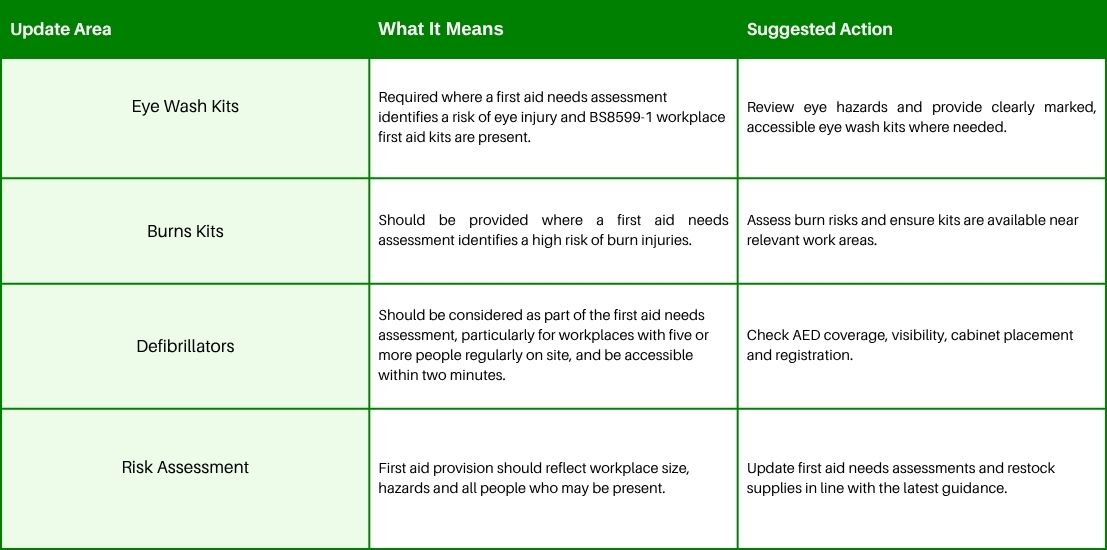
The table below summarises the key updates introduced by BS8599-1:2019+A1:2026, explaining what each change means and the practical actions employers should consider when reviewing their workplace first aid provision:

Update AreaWhat It MeansSuggested Action
Eye Wash KitsRequired where a first aid needs assessment identifies a risk of eye injury and BS8599-1 workplace first aid kits are present.Review eye hazards and provide clearly marked, accessible eye wash kits where needed.
Burns KitsShould be provided where a first aid needs assessment identifies a high risk of burn injuries.Assess burn risks and ensure kits are available near relevant work areas.
DefibrillatorsShould be considered as part of the first aid needs assessment, particularly for workplaces with five or more people regularly on site, and be accessible within two minutes.Check AED coverage, visibility, cabinet placement and registration.
Risk AssessmentFirst aid provision should reflect workplace size, hazards and all people who may be present.Update first aid needs assessments and restock supplies in line with the latest guidance.

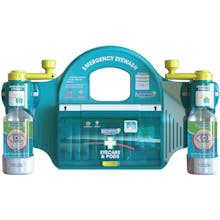
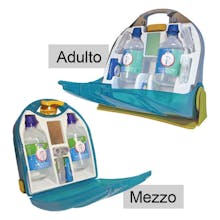
Eye Wash First Aid Kits – Now Part of 2026 British First Aid Standards

Eye injuries can happen quickly in environments where chemicals, dust, debris or other hazards are present.

Even minor eye incidents can lead to serious consequences if they are not treated promptly, making accessible eye irrigation an important part of workplace first aid provision.

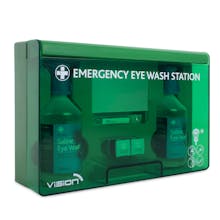
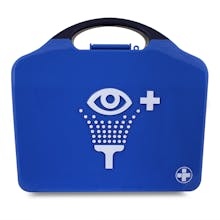
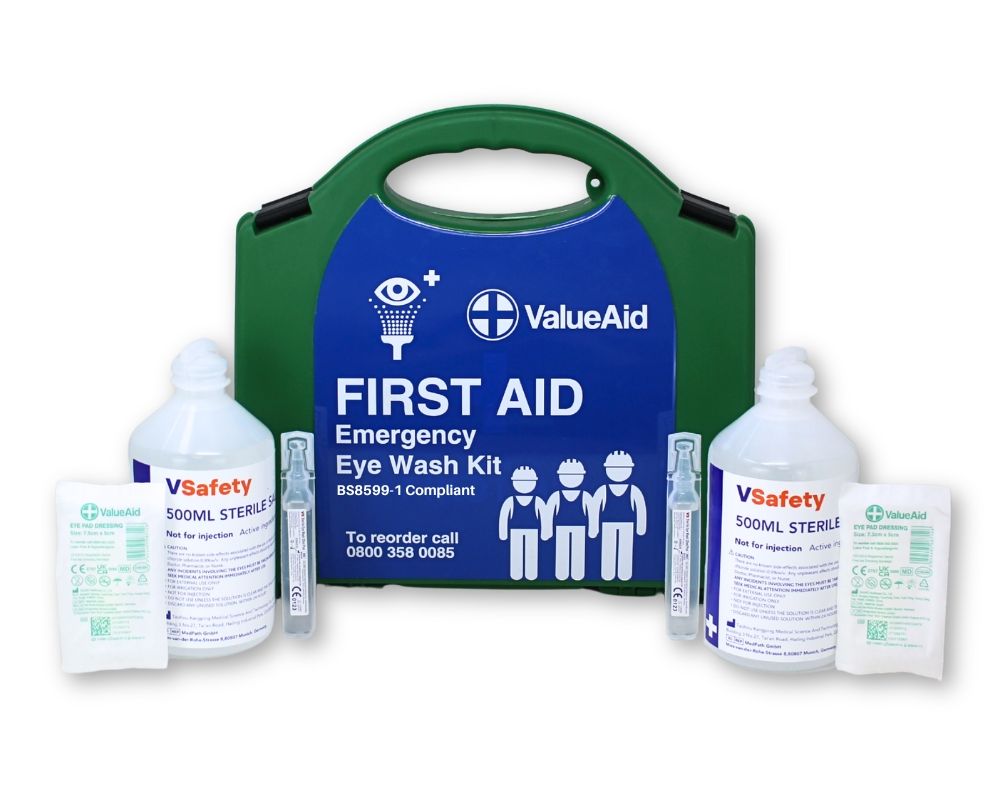
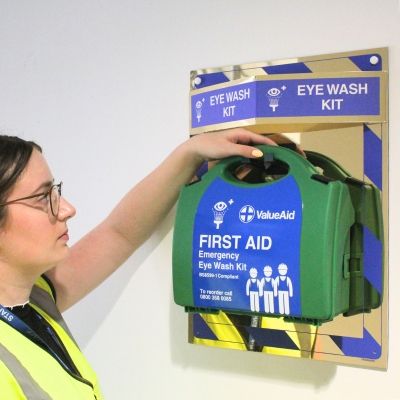
Following a risk assessment, employers should provide eye wash first aid kits wherever a risk to eyes has been identified and workplace first aid kits in accordance with BS8599-1 are present. Kits should be clearly marked, readily accessible and issued to first aiders or personnel where appropriate to their role.


For higher-risk environments, employers may also need to consider specialist equipment such as plumbed-in systems or buffered solutions where there is a risk of acid or alkali contamination, alongside appropriate training.

Image Full

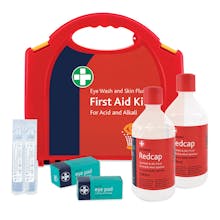
BS8599-1:2026 Eye Wash Kit Contents Guidance

The table below outlines the eye wash components and quantities recommended within a workplace eye wash kit under BS8599-1:2026.

ComponentSpecificationQuantity
Contents ListProvides details of the eye wash kit contents and their intended purpose1
Sterile Eye Pad Dressing with BandageSterile eye dressing with attached conforming bandage for protecting and securing an injured eye2
Eye Wash Bottle (500ml)Sterile 0.9% saline eye wash solution supplied in 500ml bottles for eye irrigation2
Eye Wash Solution Pod (20ml)Single-use sterile 0.9% saline eye wash pods for immediate eye irrigation2

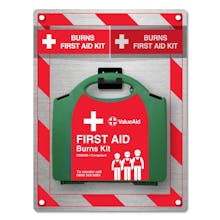
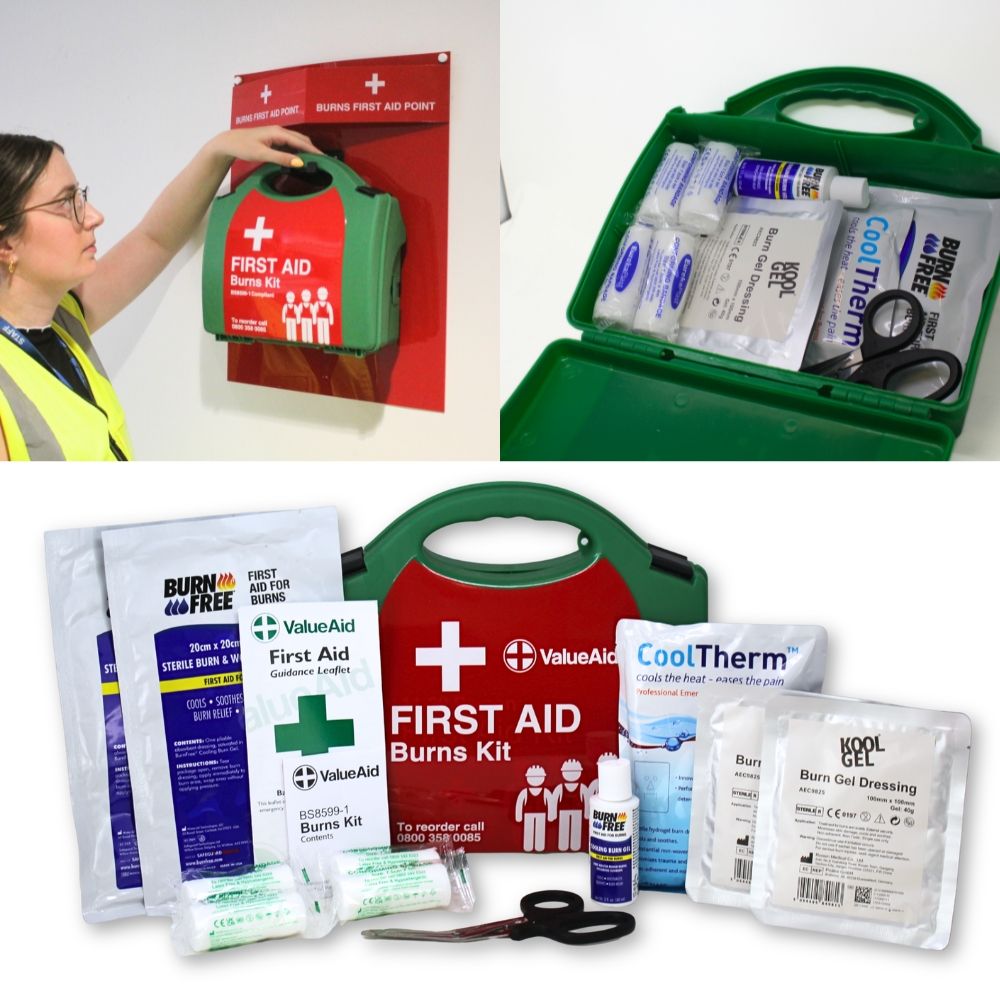
Burn First Aid Kits – Now Part of 2026 British First Aid Standards

Image

Burn injuries are a common risk in workplaces such as catering, manufacturing, construction, engineering and maintenance environments. Heat, hot liquids, steam, chemicals and electricity can all create burn hazards that require fast and appropriate first aid response.

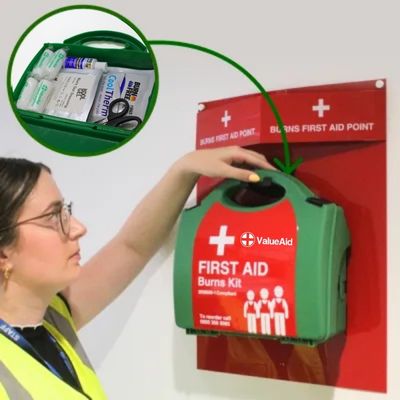
Following a risk assessment, employers should provide burn first aid kits where a high risk of burn injuries has been identified. These kits should be clearly marked, readily accessible and stocked in accordance with BS8599-1:2026 guidance.

Where there is a risk of burns to the face, face burn dressings should be provided. Where there is not easy and rapid access to a 20-minute supply of running water, suitable burn dressings should be made available in appropriate sizes and quantities.

Image Full

Burn injuries are a common risk in workplaces such as catering, manufacturing, construction, engineering and maintenance environments. 

Heat, hot liquids, steam, chemicals and electricity can all create burn hazards that require fast and appropriate first aid response.

Following a risk assessment, employers should provide burn first aid kits where a high risk of burn injuries has been identified. These kits should be clearly marked, readily accessible and stocked in accordance with BS8599-1:2026 guidance.

Where there is a risk of burns to the face, face burn dressings should be provided. Where there is not easy and rapid access to a 20-minute supply of running water, suitable burn dressings should be made available in appropriate sizes and quantities.

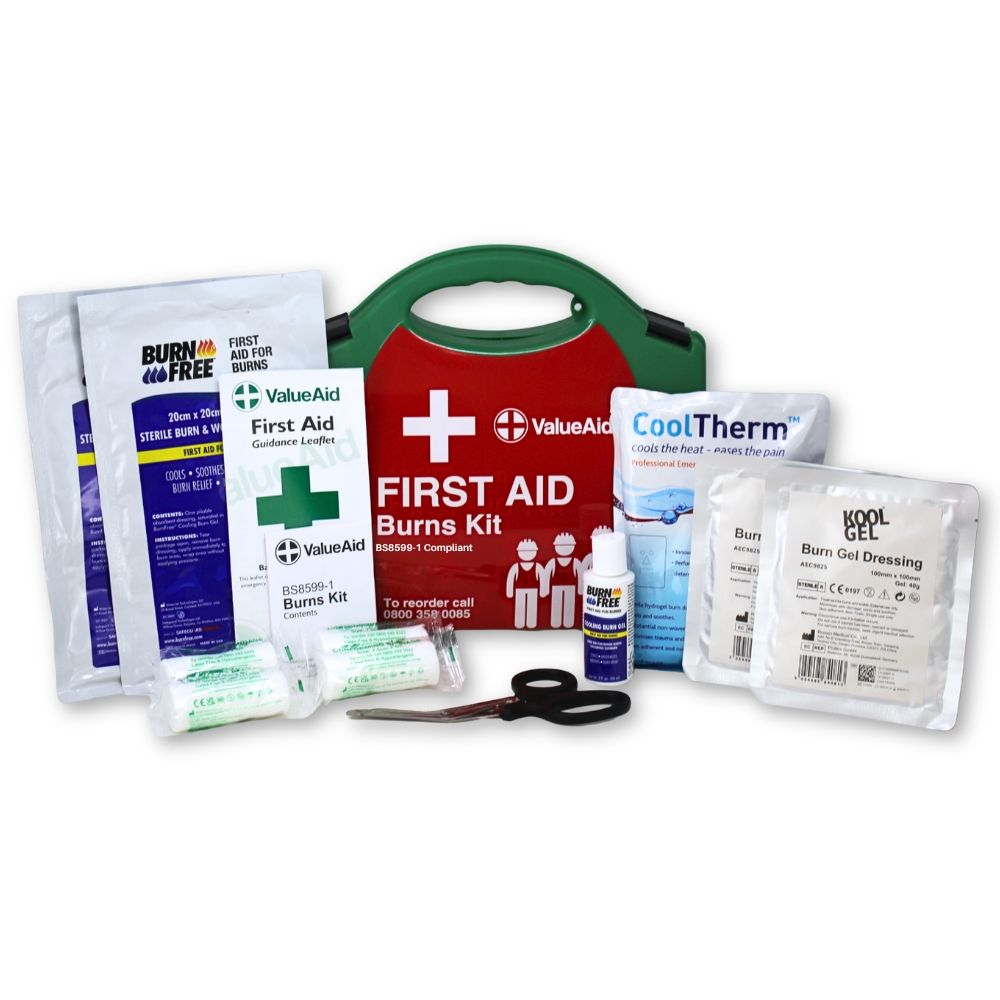
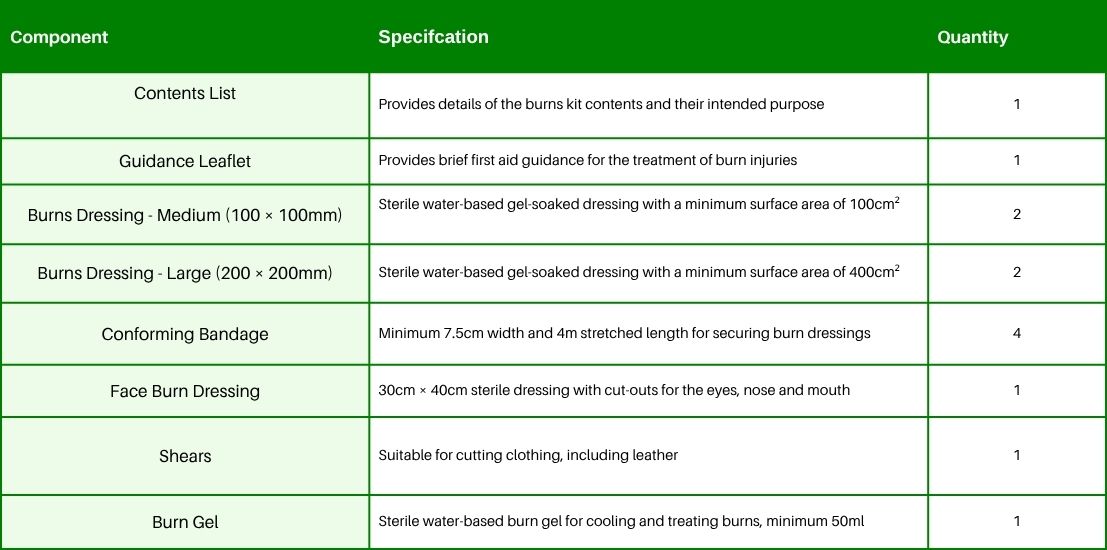
BS8599-1:2026 Burns Kit Contents Guidance

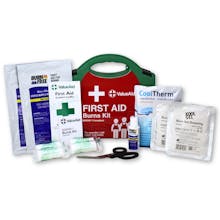
The table below outlines the burn care components and quantities recommended within a workplace burns kit under BS8599-1:2026.

ComponentSpecificationQuantity
Contents ListProvides details of the burns kit contents and their intended purpose1
Guidance LeafletProvides brief first aid guidance for the treatment of burn injuries1
Burns Dressing - Medium (100 × 100mm)Sterile water-based gel-soaked dressing with a minimum surface area of 100cm²2
Burns Dressing - Large (200 × 200mm)Sterile water-based gel-soaked dressing with a minimum surface area of 400cm²2
Conforming BandageMinimum 7.5cm width and 4m stretched length for securing burn dressings4
Face Burn Dressing30cm × 40cm sterile dressing with cut-outs for the eyes, nose and mouth1
ShearsSuitable for cutting clothing, including leather1
Burn GelSterile water-based burn gel for cooling and treating burns, minimum 50ml1

Defibrillators – Now Part of 2026 British First Aid Standards

Image Full

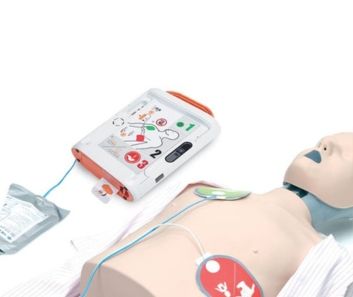
Sudden cardiac arrest can happen without warning and requires immediate action. Rapid access to CPR and an Automated External Defibrillator can significantly improve the chances of survival, which is why AED provision is now a key consideration within BS8599-1:2026 workplace first aid guidance.

Businesses with an estimated five or more people on site during operating hours should review AED provision as part of their first aid needs assessment. Employers should make a realistic estimate of maximum and regular occupancy, including employees, visitors, contractors and customers where relevant.

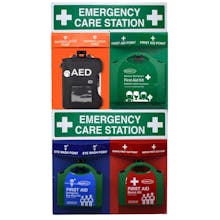
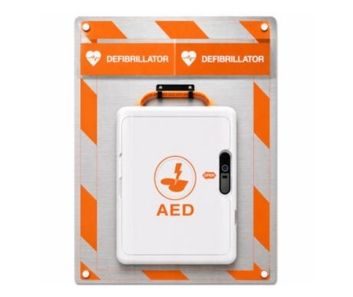
An AED should be clearly displayed in a cabinet or wall-mounted position and accessible within two minutes from any location on the premises. Larger workplaces, multiple-building sites or sites with public access may need more than one AED to meet this response expectation.

Make AEDs available to the public where possible.

  • Consider offsite employees, remote workers, vehicle-based teams and lone workers within the wider first aid needs assessment.
  • Register devices with the National Defibrillator Network so emergency services and the public can locate them when needed.
  • Check pads, batteries, signage and cabinet access regularly so the device remains ready for use.

Our range of defibrillators includes semi-automatic and automatic models from leading brands, alongside cabinets, signs, replacement pads and accessories to help organisations maintain visible, accessible and reliable emergency cover.